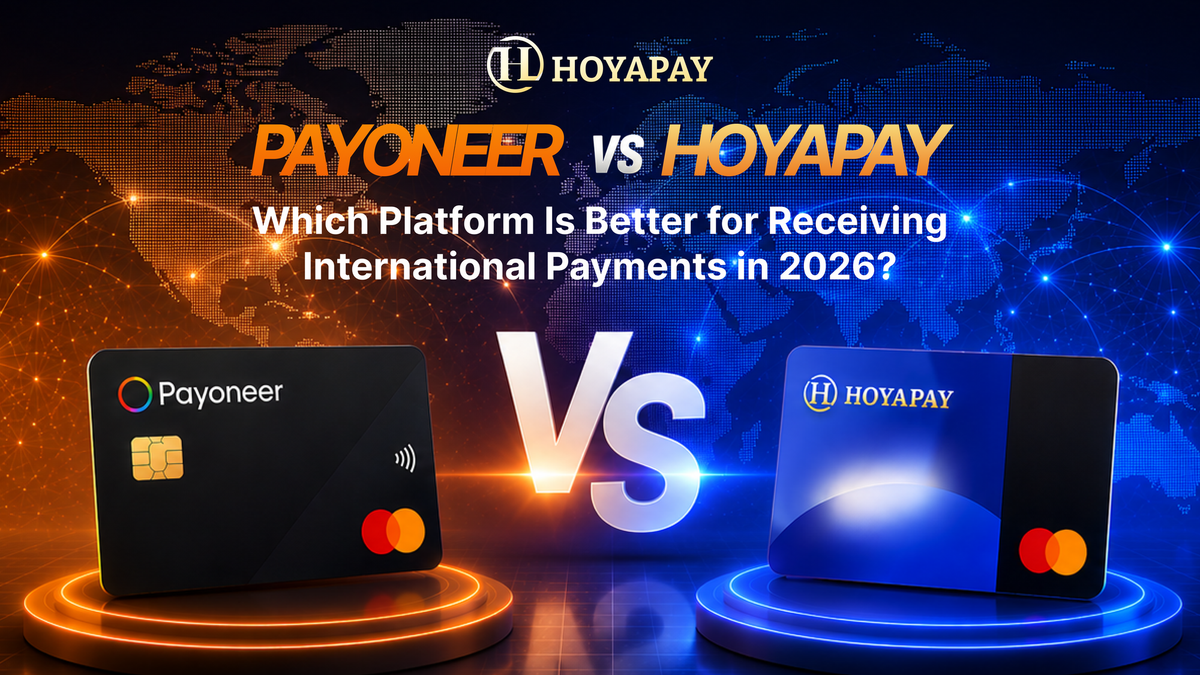
Payoneer vs HOYAPAY: Which Platform Is Better for Receiving International Payments in 2026?

Keywords: Payoneer Alternative, Payoneer vs HOYAPAY, Receive International Payments, Freelancer Payments, USD Account, Global Payments, Virtual Card, Cross Border Payments
Introduction
For freelancers, agencies, remote workers, and online businesses, receiving international payments efficiently is critical.
Many professionals rely on platforms like Payoneer to collect payments from overseas clients, marketplaces, and global businesses.
However, the way people work and get paid is changing.
Today's users often need more than just payment collection. They need:
- USD Accounts
- Multi-currency management
- Virtual Cards
- Global spending
- Stablecoin support
- Fast cross-border transfers
This has led many users to compare Payoneer with newer alternatives such as HOYAPAY.
In this guide, we'll compare Payoneer and HOYAPAY across the most important categories for freelancers and global businesses in 2026.
What Is Payoneer?
Payoneer is one of the most widely used international payment platforms.
It is commonly used by:
- Freelancers
- Marketplace sellers
- Agencies
- Service providers
- Online businesses
Payoneer allows users to:
- Receive international payments
- Access receiving accounts
- Transfer funds to local bank accounts
- Use a Payoneer card in supported markets
Because of its strong marketplace integrations, Payoneer remains popular among freelancers worldwide.
What Is HOYAPAY?
HOYAPAY is a modern global payment platform designed for digital-first users.
The platform combines:
- USD Accounts
- Multi-currency support
- Virtual Cards
- Global transfers
- Stablecoin functionality
- Cross-border payment solutions
HOYAPAY is designed for freelancers, creators, digital nomads, remote workers, e-commerce sellers, and Web3 users who need flexible global financial tools.
Payoneer vs HOYAPAY: Quick Comparison
| Feature | Payoneer | HOYAPAY |
|---|---|---|
| USD Account | Yes | Yes |
| Multi-Currency Support | Yes | Yes |
| Virtual Card | Limited | Yes |
| Physical Card | Yes | Available |
| Global Transfers | Yes | Yes |
| Stablecoin Support | No | Yes |
| USDT Support | No | Yes |
| Crypto Functionality | No | Yes |
| Cross-Border Payments | Yes | Yes |
| Digital Asset Support | No | Yes |
Receiving International Payments
Payoneer
Payoneer is well known for helping users receive payments from:
- International clients
- Online marketplaces
- Global businesses
Advantages
- Strong brand recognition
- Broad international adoption
- Popular among freelancers
Potential Limitations
- Primarily focused on traditional financial systems
- No stablecoin support
HOYAPAY
HOYAPAY supports international payment collection while offering broader financial flexibility.
Advantages
- USD collection accounts
- Global transfers
- Stablecoin integration
- Multi-currency management
It is particularly suitable for users operating across both traditional and digital economies.
USD Account Comparison
A USD Account is one of the most important tools for international freelancers and remote workers.
It allows users to:
- Receive USD payments
- Hold USD balances
- Manage currency conversion
- Improve payment flexibility
Payoneer USD Account
Ideal for:
- Marketplace payouts
- Client payments
- International contractors
HOYAPAY USD Account
Ideal for:
- Freelancers
- Remote workers
- Digital nomads
- Creators
- Global businesses
Additional flexibility comes from integrated spending capabilities and digital asset functionality.
Virtual Card Comparison
Virtual cards have become essential for remote work and online business operations.
Common expenses include:
- ChatGPT
- Netflix
- Spotify
- AWS
- Google Ads
- Meta Ads
- SaaS subscriptions
Payoneer Card
Payoneer offers card solutions in supported markets.
Benefits
- Spend international earnings
- Access funds globally
Limitations
- Availability varies by country
HOYAPAY Virtual Card
HOYAPAY provides virtual card functionality designed for global online spending.
Users can pay for:
- Advertising platforms
- Cloud services
- AI tools
- Subscription services
- E-commerce expenses
without requiring complex payment workflows.
Stablecoin Support
This is one of the biggest differences between the two platforms.
Payoneer
Payoneer focuses entirely on traditional financial services.
Supported
- Fiat currency transactions
- Bank withdrawals
Not Supported
- Stablecoins
- Cryptocurrency transactions
HOYAPAY
HOYAPAY supports stablecoin functionality, including USDT-related payment use cases.
Supported
- Stablecoin management
- Cross-border digital payments
- Digital asset flexibility
This makes HOYAPAY particularly attractive for Web3 users, crypto professionals, and globally distributed teams.
Currency Management
Managing multiple currencies efficiently can reduce costs and improve financial flexibility.
Payoneer
Allows users to receive and manage international payments through supported currencies.
HOYAPAY
Supports:
- Multi-currency accounts
- Currency conversion
- Global payment management
- Stablecoin integration
This allows users to manage both fiat and digital assets from a single platform.
Real-World Use Cases
Freelancer Working with International Clients
Receives payments from:
- Agencies
- Overseas businesses
- Direct clients
Both Payoneer and HOYAPAY can support this workflow.
E-commerce Seller
Receives international sales revenue and pays suppliers globally.
Multi-currency management becomes increasingly important.
Digital Nomad
Travels frequently and requires:
- Global payment access
- Currency flexibility
- Online spending capabilities
Virtual cards become an essential tool.
Web3 Professional
Receives payments in digital assets and manages international expenses.
Stablecoin support becomes a major advantage.
Who Should Choose Payoneer?
Payoneer may be the better option if you:
- Use traditional payment systems
- Receive marketplace payouts
- Need a widely recognized platform
- Do not require crypto functionality
Best For
- Traditional freelancers
- Marketplace sellers
- Agencies
Who Should Choose HOYAPAY?
HOYAPAY may be the better option if you:
- Need a USD Account
- Use virtual cards frequently
- Receive international payments
- Require stablecoin support
- Operate globally
- Work in Web3 or digital finance
Best For
- Freelancers
- Creators
- Remote workers
- Digital nomads
- E-commerce sellers
- Web3 users
Frequently Asked Questions
Is HOYAPAY a Payoneer alternative?
Yes.
HOYAPAY provides USD Accounts, virtual cards, global payment functionality, and stablecoin support.
Can I receive USD payments with both platforms?
Yes.
Both platforms provide USD receiving capabilities.
Does Payoneer support cryptocurrency?
No.
Payoneer focuses on traditional financial services.
Does HOYAPAY support USDT?
Yes.
HOYAPAY supports stablecoin-related functionality.
Which platform is better for freelancers?
The answer depends on your requirements.
Users focused on traditional marketplace payouts may prefer Payoneer.
Users seeking virtual cards, global spending, and stablecoin support may prefer HOYAPAY.
Which platform is better for digital nomads?
Digital nomads often benefit from platforms offering:
- Global accessibility
- Virtual cards
- Multi-currency functionality
What is the best Payoneer alternative in 2026?
Popular alternatives include:
- HOYAPAY
- Wise
- Airwallex
- Revolut
The best choice depends on individual use cases.
Final Verdict
Payoneer remains one of the most recognized international payment platforms for freelancers and marketplace sellers.
However, the needs of global workers continue to evolve.
Users increasingly require:
- USD Accounts
- Virtual Cards
- Global Spending
- Stablecoin Support
- Multi-Currency Management
HOYAPAY combines these capabilities into a unified platform, making it a compelling alternative for freelancers, creators, digital nomads, e-commerce sellers, and businesses operating internationally.
When choosing between Payoneer and HOYAPAY, the best solution ultimately depends on how you receive, manage, convert, and spend your money globally.